
Description
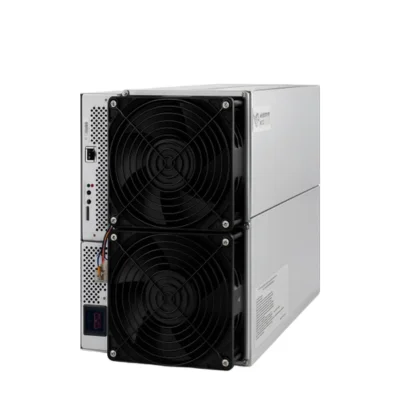
Whatsminer M72S 264TH/s Bitcoin ASIC Miner
The Whatsminer M72S is presented as a high-performance SHA-256 ASIC miner designed for professional Bitcoin mining. The configuration covered on this page delivers approximately 264TH/s while consuming around 4,000W.
Based on those submitted specifications, the Whatsminer M72S provides calculated power efficiency of approximately 15.15J/TH. This means the machine uses about 15.15 joules of electricity for each terahash of SHA-256 mining performance delivered per second.
The Whatsminer M72S uses Ethernet connectivity, industrial forced-air cooling, high-speed fans and a substantial continuous electrical load. It is designed for mining farms, professional hosting facilities, workshops and dedicated mining rooms with suitable power and ventilation.
Because a directly accessible official MicroBT product page for the exact 264TH/s configuration could not be confirmed, buyers should verify the model name, hashrate, power consumption, PSU, dimensions, temperature range and warranty against the factory label and seller documentation.
Before purchasing the Whatsminer M72S, calculate electricity expenses, mining-pool fees, ventilation, hosting, shipping, customs duties, repairs and maintenance. Bitcoin mining profitability and return on investment are never guaranteed.
Browse additional Bitcoin miners, compare more ASIC miners, read our Bitcoin ASIC miner guide, or visit Hash Titans for professional cryptocurrency-mining equipment.
Whatsminer M72S Key Features
The Whatsminer M72S combines high SHA-256 output, wired network management and industrial air cooling for professional Bitcoin-mining environments.
- Manufacturer: MicroBT
- Product family: WhatsMiner
- Model: M72S
- Full product name: Whatsminer M72S
- Miner type: Air-cooled SHA-256 ASIC miner
- Primary cryptocurrency: Bitcoin
- Submitted hashrate: Approximately 264TH/s
- Submitted power consumption: Approximately 4,000W
- Calculated efficiency: Approximately 15.15J/TH
- Network interface: Ethernet
- Cooling system: Industrial forced-air cooling
- Submitted fan count: Two
- Submitted noise level: Approximately 75dB
- Submitted weight: Approximately 13.5kg
- Submitted power-cable rating: Approximately 16A
- Submitted operating temperature: Approximately −5°C to 40°C
- Submitted humidity range: Approximately 10% to 90%, non-condensing
- Recommended installation: Mining farm, hosting facility or dedicated mining room
Whatsminer M72S Specifications
| Manufacturer | MicroBT |
|---|---|
| Model | Whatsminer M72S |
| Mining algorithm | SHA-256 |
| Primary network | Bitcoin |
| Submitted hashrate | Approximately 264TH/s |
| Submitted power consumption | Approximately 4,000W |
| Calculated efficiency | Approximately 15.15J/TH |
| Cooling method | Industrial forced-air cooling |
| Submitted fan count | Two |
| Submitted noise level | Approximately 75dB |
| Network interface | Ethernet |
| Submitted weight | Approximately 13.5kg |
| Submitted power cable | Approximately 16A; verify connector and cable standard |
| Submitted operating temperature | Approximately −5°C to 40°C |
| Submitted humidity | Approximately 10% to 90%, non-condensing |
| Warranty | Depends on seller terms and applicable manufacturer coverage |
Specification warning: The 264TH/s and 4,000W figures describe the submitted configuration. Verify the exact Whatsminer M72S against its factory label, invoice, firmware dashboard and measured wall consumption.
The submitted HTML does not provide dimensions or an exact input-voltage range. These details should not be copied from another WhatsMiner model without confirming that the M72S uses the same chassis and power-supply platform.
Whatsminer M72S Mining Performance
The Whatsminer M72S performs approximately 264 trillion SHA-256 calculations every second under its nominal operating configuration.
Actual local hashrate may move above or below 264TH/s because of firmware, mining mode, ambient temperature, airflow quality, input voltage, fan condition, PSU stability and hashboard health.
Pool-side accepted hashrate may also differ from the local dashboard because of network latency, rejected shares, stale shares, pool-server location and short-term statistical variation.
Factors That Affect M72S Hashrate
- Firmware version
- Selected operating profile
- Ambient temperature
- Intake-air temperature
- Exhaust recirculation
- Dust accumulation
- Fan condition
- Power-supply stability
- Hashboard condition
- Ethernet reliability
Operators should compare the local Whatsminer M72S dashboard with average pool-side accepted hashrate over several hours rather than relying on a brief performance peak.
Important Monitoring Values
- Real-time hashrate
- Average hashrate
- Pool-side accepted hashrate
- Accepted shares
- Rejected shares
- Stale shares
- Hashboard temperatures
- Fan speeds
- PSU condition
- Network uptime
Whatsminer M72S Power Efficiency
The nominal efficiency of the submitted Whatsminer M72S configuration is calculated as follows:
4,000W ÷ 264TH/s = approximately 15.15J/TH
This means the miner uses approximately 15.15 joules of electricity for every terahash of SHA-256 mining performance delivered per second.
Lower joules-per-terahash generally means better electricity efficiency. However, the final buying decision should also consider miner price, condition, cooling cost, warranty, uptime and repair availability.
Efficiency Comparison Factors
- Total hashrate
- Power consumption
- Joules per terahash
- Hardware purchase price
- Electricity rate
- Ventilation cost
- Hosting charges
- Expected uptime
- Repair availability
- Resale value
Whatsminer M72S Electricity Consumption
At a continuous nominal load of 4,000W, the Whatsminer M72S consumes approximately:
- 96kWh per day
- 672kWh per week
- 2,880kWh per 30-day month
- 35,040kWh per year
Estimated Monthly Electricity Costs
- At $0.03/kWh: approximately $86.40
- At $0.05/kWh: approximately $144.00
- At $0.08/kWh: approximately $230.40
- At $0.10/kWh: approximately $288.00
- At $0.15/kWh: approximately $432.00
- At $0.20/kWh: approximately $576.00
- At $0.30/kWh: approximately $864.00
Actual wall consumption may vary because of firmware, operating profile, input voltage, PSU efficiency, fan speed, room temperature and machine condition.
Use a correctly rated power meter or monitored PDU to measure the real electricity consumption of the Whatsminer M72S.
Whatsminer M72S Profitability Factors
The profitability of the Whatsminer M72S depends on current mining revenue and total operating expenses.
Important profitability factors include:
- Current Bitcoin price
- Bitcoin network difficulty
- Total Bitcoin network hashrate
- Current block subsidy
- Transaction-fee revenue
- Mining-pool fees
- Rejected-share percentage
- Electricity rate
- Cooling and ventilation cost
- Hosting charges
- Miner purchase price
- Repair and maintenance expenses
Daily Electricity-Cost Examples
- At $0.03/kWh: approximately $2.88 per day
- At $0.05/kWh: approximately $4.80 per day
- At $0.08/kWh: approximately $7.68 per day
- At $0.10/kWh: approximately $9.60 per day
- At $0.15/kWh: approximately $14.40 per day
- At $0.20/kWh: approximately $19.20 per day
Calculate net income by subtracting electricity, ventilation, pool fees, hosting and maintenance from current gross mining revenue.
Do not rely on fixed daily-profit or guaranteed-return claims when evaluating the Whatsminer M72S.
Whatsminer M72S SHA-256 Compatibility
The Whatsminer M72S is presented as a SHA-256 proof-of-work ASIC miner. Bitcoin mining software prepares block-header work and sends it with a target threshold to the mining hardware.
The miner repeatedly performs SHA-256 calculations while searching for qualifying results. When connected to a mining pool, it submits lower-difficulty shares showing that assigned work has been completed.
The machine may support other SHA-256 networks when compatible pools and firmware are available. It cannot mine unrelated algorithms such as:
- Scrypt used by Litecoin and Dogecoin
- kHeavyHash used by Kaspa
- RandomX used by Monero
- BLAKE3 used by Alephium
- NexaPow used by Nexa
- Ethash-family algorithms
Review the official WhatsMiner website, the official WhatsMiner support portal, and the official Bitcoin mining documentation.
Whatsminer M72S Mining-Pool Setup
The Whatsminer M72S normally connects to a compatible SHA-256 mining pool through wired Ethernet.
Pool configuration typically requires:
- A compatible Stratum server address
- A Bitcoin payout address or pool account
- A worker name
- A pool password
- Secondary and tertiary backup pools
Pool Selection Checklist
- Pool fee
- Payout method
- Minimum payout threshold
- Regional server availability
- Historical uptime
- Rejected-share performance
- Worker-monitoring tools
- Account-security options
- Customer support
- Pool hashrate concentration
After setup, confirm that the Whatsminer M72S displays an active pool connection and begins submitting accepted shares.
Whatsminer M72S Electrical Requirements
A miner consuming 4,000W requires a properly designed high-voltage electrical circuit. The exact voltage, phase, cable and connector requirements must be confirmed from the factory label.
Approximate current at a 4,000W load would be:
- Approximately 18.18A at 220V
- Approximately 17.39A at 230V
- Approximately 16.67A at 240V
These simplified calculations do not account for power factor, PSU conversion losses or startup behaviour.
The submitted 16A cable rating may be insufficient at some voltage and continuous-load conditions. Do not select the power cable or breaker using the submitted figure alone.
Electrical Preparation
- Confirm the exact factory input voltage.
- Use proper equipment grounding.
- Install correctly rated circuit protection.
- Use a connector approved for the miner.
- Use a power cable rated for the actual continuous current.
- Use an industrial or mining-rated PDU.
- Keep electrical connections secure.
- Provide an accessible emergency disconnect.
- Follow local electrical regulations.
A qualified electrician should inspect the installation before the Whatsminer M72S is energized.
Whatsminer M72S Cooling and Noise
The Whatsminer M72S converts approximately 4,000W of electrical power into continuous heat. The mining room must supply enough cool intake air and remove warm exhaust efficiently.
The submitted noise rating is approximately 75dB. Actual sound may vary with fan speed, room temperature, airflow resistance, firmware and machine condition.
Cooling Recommendations
- Keep intake and exhaust openings unobstructed.
- Separate cool intake air from hot exhaust.
- Use exhaust ducting where appropriate.
- Provide strong room-level air exchange.
- Avoid sealed cabinets without extraction.
- Remove dust from fans and heatsinks.
- Monitor intake-air temperature.
- Monitor hashboard temperatures.
- Prevent moisture and condensation.
- Do not install the miner in a bedroom or occupied office.
A mining farm, warehouse, detached garage, workshop or professional hosting facility is generally more suitable for the Whatsminer M72S than a normal living space.
Whatsminer M72S Installation Guide
- Inspect the package and miner for shipping damage.
- Confirm that the factory label states M72S.
- Verify the factory hashrate rating.
- Confirm the power consumption and input voltage.
- Inspect the fans, PSU and electrical connectors.
- Confirm that the electrical circuit is correctly rated.
- Place the miner in a ventilated location.
- Connect the Ethernet cable.
- Connect the approved power cable securely.
- Energize the electrical circuit.
- Locate the miner’s IP address.
- Open the management interface.
- Change the default password.
- Enter the primary mining-pool address.
- Add the pool account and worker name.
- Configure secondary and tertiary pools.
- Save and apply the settings.
- Monitor hashrate, temperatures, fans and wall power.
During initial operation, monitor the Whatsminer M72S for unstable hashrate, missing hashboards, repeated restarts, unusual fan sounds, overheated connectors and excessive rejected shares.
Whatsminer M72S Maintenance
Routine maintenance helps the Whatsminer M72S maintain stable hashrate, airflow, network connectivity and pool performance.
- Inspect the intake and exhaust fans.
- Remove accumulated dust safely.
- Monitor hashboard temperatures.
- Inspect power cables and connectors.
- Check the PSU for overheating.
- Inspect Ethernet cables and switches.
- Compare local and pool-side hashrate.
- Review rejected and stale shares.
- Back up mining-pool settings.
- Use only compatible official firmware.
- Disconnect and isolate power before servicing.
Use official WhatsMiner technical resources for firmware, tools and maintenance guidance.
Whatsminer M72S Model Comparison
The Whatsminer M72S should be distinguished from officially documented M70-series machines and any other similarly named products.
- WhatsMiner M70S: Related air-cooled high-efficiency mining model
- WhatsMiner M70S+: Higher-output submitted configuration
- Whatsminer M72S: Submitted configuration rated at 264TH/s and 4,000W
- Hydro and immersion models: Separate cooling architectures requiring different infrastructure
Do not identify the miner solely by chassis appearance. Confirm the model label, firmware dashboard, PSU, hashrate, power rating and serial information.
Whatsminer M72S Buying Considerations
Check Before Ordering
- Exact M72S factory model label
- Factory hashrate rating
- Factory power rating
- Input-voltage requirement
- Dimensions and weight
- New, used or refurbished condition
- Hashboard condition
- Fan condition
- PSU condition
- Control-board condition
- Firmware version
- Repair history
- Power-cable inclusion
- Seller warranty
- Return policy
Request a current dashboard screenshot or test video showing the exact Whatsminer M72S hashrate, temperatures, fan speeds, uptime and pool performance.
Contact Hash Titans to check availability, configuration, pricing, shipping and purchase support.
Whatsminer M72S Warranty and Shipping
Warranty coverage depends on the seller, purchase channel, production batch and whether applicable MicroBT coverage can be verified.
- Confirm the warranty period in writing.
- Ask who handles technical repairs.
- Review the return period.
- Confirm covered failures.
- Verify the shipping warehouse.
- Review shipping-insurance coverage.
- Check customs duties and taxes.
- Request protective packaging.
- Inspect the miner immediately after delivery.
- Record shipping damage before powering it on.
Damage caused by unsuitable voltage, inadequate ventilation, unauthorized modification, incompatible firmware or improper repairs may not be covered.
Whatsminer M72S Frequently Asked Questions
What is the Whatsminer M72S?
The Whatsminer M72S is presented as an air-cooled SHA-256 ASIC miner for professional Bitcoin mining.
What is its submitted hashrate?
The configuration covered on this page is listed at approximately 264TH/s.
How much power does it use?
The submitted power consumption is approximately 4,000W.
What is its calculated efficiency?
At 264TH/s and 4,000W, calculated efficiency is approximately 15.15J/TH.
Are the specifications officially confirmed?
A directly accessible official MicroBT page for the exact submitted configuration could not be located. Buyers should verify the factory label and dashboard.
Which algorithm does it mine?
The miner is listed as using the SHA-256 proof-of-work algorithm.
Can it mine Bitcoin?
Yes. Bitcoin is the primary network associated with SHA-256 ASIC mining.
Can it mine Litecoin or Dogecoin?
No. Litecoin and Dogecoin use the Scrypt algorithm.
How much electricity does it use daily?
At 4,000W, continuous operation consumes approximately 96kWh per day.
What does electricity cost at $0.10 per kWh?
Electricity costs approximately $9.60 per day or $288 per 30-day month.
Is the Whatsminer M72S profitable?
Profitability is not guaranteed. Bitcoin price, network difficulty, electricity, pool fees, hardware cost and uptime all affect results.
Is it suitable for home mining?
It is generally unsuitable for normal living spaces because of its 4kW load, heat output and industrial fan noise.
Does it require Ethernet?
Yes. A wired Ethernet connection is listed for network access.
What is its submitted operating temperature?
The submitted range is approximately −5°C to 40°C.
What is its submitted humidity range?
The submitted range is approximately 10% to 90%, non-condensing.
Is a 16A cable sufficient?
That depends on voltage, cable rating, connector type, local electrical code and continuous-load requirements. A qualified electrician should calculate the correct circuit.
Can it run on a household extension cord?
No. Lightweight extension cords are unsuitable for a continuous 4,000W load.
Can I use third-party firmware?
Unofficial firmware may affect stability, security, electricity use and warranty coverage. Use official model-compatible firmware.
Where can I buy the Whatsminer M72S?
You can contact Hash Titans to confirm model authenticity, stock, pricing, shipping and seller support.
Buy Whatsminer M72S Bitcoin Mining Hardware
The Whatsminer M72S configuration covered here delivers approximately 264TH/s while consuming around 4,000W, producing calculated efficiency of approximately 15.15J/TH.
Its high output, Ethernet management and air-cooled design make it suitable for professional mining facilities with correctly designed electricity and strong ventilation.
Before ordering, verify the exact model name, factory label, hashrate, wall power, input voltage, PSU, dimensions, firmware, warranty and shipping terms.
Visit Hash Titans to compare the Whatsminer M72S with other Bitcoin ASIC miners.
Reviews
There are no reviews yet.