
Summary
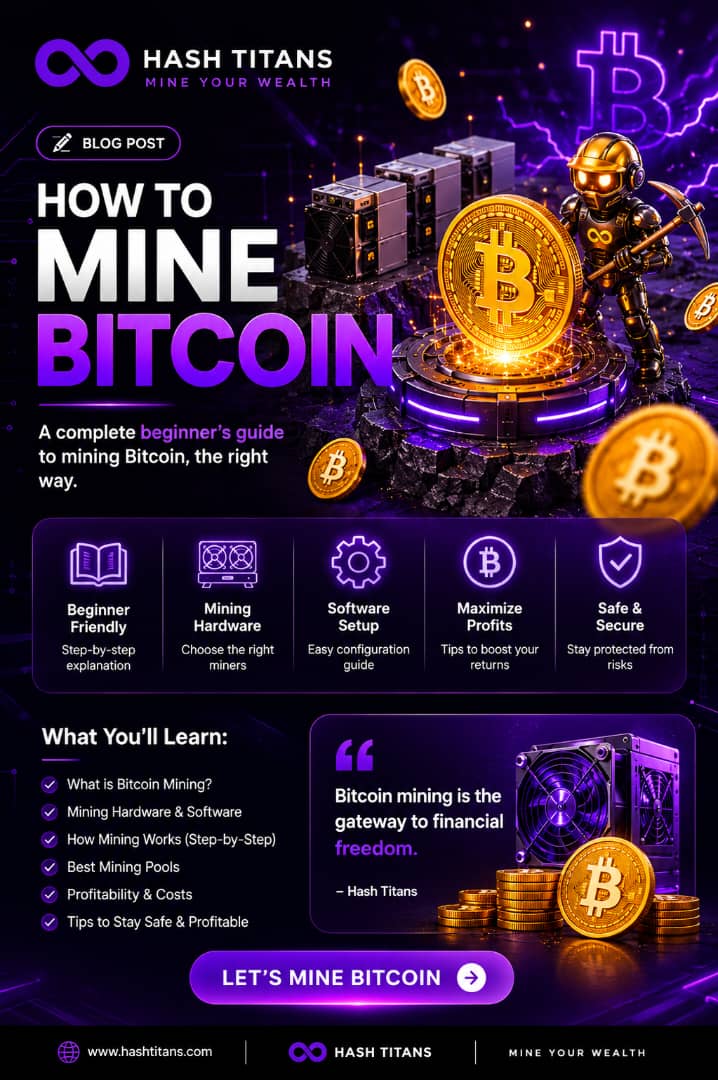
Bitcoin is the world’s first decentralized cryptocurrency, and mining is the process that keeps its blockchain secure while validating transactions. If you’ve ever wondered how to mine Bitcoin, you’re not alone. Every day, individuals and businesses explore Bitcoin mining as a way to support the network and potentially earn Bitcoin rewards.
Unlike the early days of Bitcoin, when anyone could mine using a home computer, today’s mining industry relies on specialized hardware known as ASIC (Application-Specific Integrated Circuit) miners. These machines are purpose-built to solve the complex mathematical calculations required by Bitcoin’s Proof-of-Work consensus mechanism.
In this comprehensive guide, you’ll learn how to mine Bitcoin, the equipment you’ll need, how mining pools work, how to calculate profitability, and how to choose the right ASIC miner for your goals. Whether you’re a complete beginner or looking to expand an existing mining operation, this guide will help you understand every stage of the Bitcoin mining process.
HashTitans offers a wide range of professional mining hardware, including Bitmain Antminers, WhatsMiner, IceRiver Miners, Goldshell Miners, Jasminer ASIC Miners, and essential mining accessories to help miners at every experience level.
Table of Contents
- What Is Bitcoin Mining?
- How Does Bitcoin Mining Work?
- Is Bitcoin Mining Still Profitable?
- What Equipment Do You Need?
- Choosing the Best ASIC Miner
What Is Bitcoin Mining?
Bitcoin mining is the process of verifying Bitcoin transactions and adding them to the blockchain. Every time someone sends Bitcoin, the transaction must be confirmed before it becomes permanent. Thousands of miners around the world compete to verify these transactions by solving complex cryptographic puzzles.
The first miner to successfully solve the puzzle earns the right to add a new block to the blockchain and receives a block reward along with transaction fees. This process keeps the Bitcoin network decentralized, secure, and resistant to fraud.
Unlike traditional financial systems that rely on banks or payment processors, Bitcoin depends on miners to maintain the integrity of its network without requiring a central authority.
Why Bitcoin Mining Matters
- Secures the Bitcoin blockchain.
- Verifies transactions.
- Prevents double spending.
- Maintains decentralization.
- Introduces new Bitcoin into circulation.
To better understand the technology behind Bitcoin, visit Bitcoin.org, which provides educational resources about how the Bitcoin network operates.
How Does Bitcoin Mining Work?
To understand how to mine Bitcoin, it’s important to know what happens behind the scenes. Bitcoin uses the SHA-256 hashing algorithm. Every ASIC miner repeatedly performs trillions of calculations every second in an attempt to discover a valid block hash.
A hash is a unique string of numbers and letters generated from block data. The miner that discovers a valid hash meeting the network’s current difficulty target earns the opportunity to add the next block to the blockchain.
Modern ASIC miners measure their performance using hashrate, usually expressed in terahashes per second (TH/s). The higher the hashrate, the more calculations a miner performs each second, increasing the likelihood of successfully mining a block or earning rewards through a mining pool.
The Bitcoin Mining Process
- Bitcoin users broadcast transactions.
- Transactions enter the network’s memory pool.
- Miners collect pending transactions into a candidate block.
- ASIC miners calculate billions or trillions of SHA-256 hashes every second.
- The first valid block is accepted by the Bitcoin network.
- The blockchain updates, and mining rewards are distributed.
You can monitor the Bitcoin blockchain and pending transactions in real time using Mempool.space.
Is Bitcoin Mining Still Profitable?
One of the most common questions new miners ask is whether Bitcoin mining is still profitable. The answer depends on several variables rather than a simple yes or no.
Mining profitability is influenced by electricity costs, mining difficulty, Bitcoin’s market price, ASIC efficiency, and mining pool fees. Professional mining operations often locate their facilities where electricity is inexpensive, allowing them to remain competitive as mining difficulty increases.
Factors That Affect Profitability
- Electricity price.
- ASIC miner efficiency.
- Bitcoin market value.
- Network mining difficulty.
- Mining pool fees.
- Cooling expenses.
- Hardware maintenance.
Before purchasing any mining hardware, it’s a good idea to estimate potential earnings using the calculator available at ASIC Miner Value.
What Equipment Do You Need to Mine Bitcoin?
Learning how to mine Bitcoin starts with selecting the right equipment. Modern Bitcoin mining requires specialized hardware designed specifically for the SHA-256 algorithm.
ASIC Miner
The ASIC miner is the most important component of your mining setup. These machines are built exclusively for cryptocurrency mining and deliver dramatically higher performance than CPUs or GPUs.
Explore HashTitans’ complete range of Bitmain Antminers and WhatsMiner ASIC miners for reliable Bitcoin mining hardware.
Reliable Power Supply
ASIC miners require stable electrical power. Always verify that your power supply unit (PSU) matches the miner’s voltage and wattage requirements. Using an incompatible PSU can damage expensive mining equipment.
Internet Connection
A stable Ethernet connection allows your miner to communicate continuously with your chosen mining pool. Although bandwidth requirements are relatively low, connection reliability is essential.
Cooling System
Mining hardware generates significant heat during operation. Proper ventilation, adequate airflow, and routine cleaning help maintain optimal temperatures and maximize hardware lifespan.
Bitcoin Wallet
Mining rewards need a secure destination. Most miners configure a Bitcoin wallet address when joining a mining pool so that payouts are deposited automatically.
Choosing the Best ASIC Miner
Selecting the right mining hardware is one of the most important decisions you’ll make when learning how to mine Bitcoin. The ideal ASIC miner depends on your available budget, electricity costs, mining goals, and the space where the hardware will operate.
Bitmain Antminer Series
Bitmain’s Antminer lineup is among the most recognized ASIC mining platforms in the industry. Many professional mining farms rely on Antminers because of their high performance, reliable firmware, and broad community support.
Browse the latest Bitmain Antminers to compare current models.
WhatsMiner Series
MicroBT’s WhatsMiner family is another leading choice for Bitcoin mining. These miners are known for dependable operation, robust construction, and excellent efficiency in demanding mining environments.
Compare available WhatsMiner ASIC miners at HashTitans.
Which Miner Is Right for You?
- Beginners should focus on ease of setup and efficiency.
- Home miners should consider power usage and noise levels.
- Commercial miners should prioritize hashrate and return on investment.
- Always compare energy efficiency before purchasing.
How to Set Up Your Bitcoin Mining Hardware
After purchasing your ASIC miner, the next step in learning how to mine Bitcoin is setting up your equipment correctly. A proper installation improves stability, reduces downtime, and helps maximize your mining performance.
Step 1: Choose the Right Location
ASIC miners generate significant heat and noise during operation. Place your miner in a clean, dry, and well-ventilated area with good airflow. Many home miners use garages, utility rooms, or dedicated mining spaces to manage heat and sound.
Step 2: Connect the Power Supply
Connect your ASIC miner to a compatible power supply and verify that your electrical circuit can safely handle the required load. Always use manufacturer-recommended equipment to avoid damaging your hardware.
Step 3: Connect to the Internet
Most ASIC miners use a wired Ethernet connection for maximum reliability. Connect the miner to your router and power it on.
Step 4: Access the Miner Dashboard
Locate your miner’s IP address using your router or an IP scanner. Enter the IP address into a web browser to access the miner’s management interface.
Step 5: Configure Mining Pool Settings
Enter your mining pool URL, worker name, and Bitcoin wallet address. Save the configuration and restart the miner if necessary.
HashTitans also provides a variety of mining accessories that can help improve your mining setup.
Joining a Bitcoin Mining Pool
For most beginners, joining a mining pool is the best way to earn more consistent rewards. Instead of mining alone, thousands of miners combine their computing power and share rewards based on the work contributed.
Mining pools dramatically improve payout consistency compared to solo mining, especially for individuals operating only one or two ASIC miners.
Popular Bitcoin Mining Pools
Before joining a pool, compare payout methods, fees, server locations, and reliability.
Choosing a Bitcoin Wallet
You’ll need a Bitcoin wallet to receive mining payouts. Wallets securely store the private keys that control your Bitcoin.
Hardware Wallets
Hardware wallets provide excellent security by storing your private keys offline. They are recommended for long-term Bitcoin storage.
Software Wallets
Software wallets are installed on computers or smartphones and offer a balance between convenience and security for everyday use.
Exchange Wallets
Some exchanges provide built-in wallets, but many experienced users prefer keeping long-term holdings in wallets they personally control.
Maintaining Your ASIC Miner
Routine maintenance helps extend the lifespan of your mining equipment and ensures consistent performance.
Clean Dust Regularly
Dust accumulation restricts airflow and increases operating temperatures. Clean fans and heatsinks carefully using compressed air.
Monitor Temperatures
Check your miner’s dashboard regularly to monitor chip temperatures, fan speeds, and hashrate.
Keep Firmware Updated
Manufacturers periodically release firmware updates that improve performance, stability, and security. Always follow official update instructions before installing new firmware.
Inspect Power Connections
Periodically inspect power cables and connectors for signs of wear or overheating.
Common Bitcoin Mining Mistakes
Many first-time miners make avoidable mistakes that reduce efficiency or shorten hardware lifespan. Being aware of these issues can help you protect your investment.
- Ignoring electricity costs before purchasing hardware.
- Using poor ventilation or inadequate cooling.
- Buying mining hardware from unreliable sellers.
- Failing to update firmware.
- Using weak passwords on the miner dashboard.
- Not monitoring temperatures.
- Connecting to unreliable mining pools.
- Skipping routine maintenance.
Tips to Improve Mining Efficiency
Efficient mining is about more than simply purchasing a powerful ASIC miner. Following these best practices can improve reliability and reduce operating costs.
- Choose high-efficiency mining hardware.
- Optimize airflow around your mining equipment.
- Monitor electricity consumption.
- Join a reputable mining pool.
- Keep firmware up to date.
- Perform regular hardware inspections.
- Track mining performance over time.
Frequently Asked Questions
Can I mine Bitcoin from home?
Yes. Many individuals successfully mine Bitcoin from home using ASIC miners, provided they have sufficient electrical capacity, internet connectivity, and cooling.
Do I need an ASIC miner?
For Bitcoin mining, ASIC miners are the industry standard. CPUs and GPUs are generally not competitive for mining Bitcoin due to the network’s mining difficulty.
How much electricity does Bitcoin mining use?
Power consumption varies depending on the miner you choose. Always review the manufacturer’s specifications and estimate electricity costs before purchasing.
Is Bitcoin mining profitable?
Profitability depends on factors including Bitcoin’s market price, mining difficulty, electricity rates, mining pool fees, and hardware efficiency.
How long do ASIC miners last?
With proper maintenance and operating conditions, many ASIC miners can provide reliable service for several years.
Why Buy Your ASIC Miner from HashTitans?
HashTitans supplies professional cryptocurrency mining equipment for beginners, enthusiasts, and commercial mining operations. Our goal is to provide reliable hardware backed by knowledgeable support and competitive pricing.
Final Thoughts
Learning how to mine Bitcoin is an excellent way to understand one of the world’s most important blockchain technologies. While modern Bitcoin mining requires specialized ASIC hardware and careful planning, it remains an accessible activity for individuals willing to invest in quality equipment and follow industry best practices.
Whether you’re setting up your first home miner or expanding an existing operation, choosing efficient hardware, maintaining proper cooling, joining a reputable mining pool, and monitoring your equipment will help you build a more reliable mining operation.
Ready to start mining? Browse the complete range of ASIC miners and accessories available at HashTitans.com and find the right mining solution for your budget and goals.
Helpful External Resources
Mempool.space – View Bitcoin network activity in real time.
Bitcoin.org – Learn more about Bitcoin and its technology.
ASIC Miner Value – Compare ASIC miner profitability and specifications.
Bitmain – Official Antminer manufacturer.
MicroBT – Official WhatsMiner manufacturer.
Braiins – Mining firmware, pool, and educational resources.
Luxor – Bitcoin mining pool and infrastructure.
CoinDesk Learn – Cryptocurrency news and educational content.
0 Comments