
Description
Whatsminer M79S 1.35PH/s Hydro Bitcoin Miner
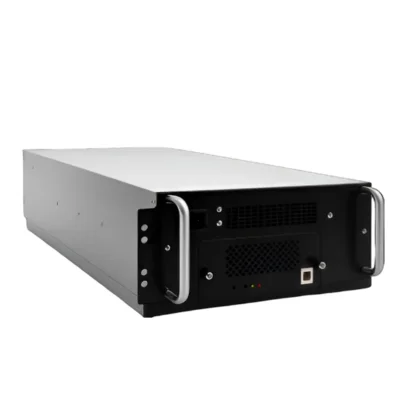
The Whatsminer M79S is a high-density hydro-cooled SHA-256 ASIC miner manufactured by MicroBT for professional Bitcoin mining farms, data-centre-style installations, mining containers, and industrial hosting facilities. This seller-supplied configuration delivers up to 1.35PH/s, equivalent to 1,350TH/s, while consuming approximately 20,000W.
Based on those figures, the Whatsminer M79S achieves a calculated energy efficiency of approximately 14.81J/TH. This exceptionally high hashrate places the machine in the petahash class, allowing one rack-mounted unit to provide the output of several conventional Bitcoin miners.
The Whatsminer M79S uses hydro cooling rather than conventional high-speed chassis fans. Coolant circulates through the miner, absorbs heat from the internal mining components, and transfers that heat to an external heat exchanger, dry cooler, cooling tower, or another facility-level heat-rejection system.
The machine operates on the SHA-256 algorithm and is primarily designed for Bitcoin mining. It can also mine Bitcoin Cash and other compatible SHA-256 cryptocurrencies where suitable firmware, pools, wallets, and market support are available.
This is not a residential miner. Its approximately 20kW electrical demand, 380–480V three-phase input, rack-mounted design, hydro-cooling requirements, and large heat load make it suitable only for professionally engineered installations.
Browse more hardware in our ASIC miner collection, or compare professional Bitcoin mining machines available from Hash Titans.
Whatsminer M79S Key Features
The Whatsminer M79S is designed for mining operators who require petahash-level SHA-256 output from a single high-density system. It is best suited to facilities where electrical distribution, coolant circulation, networking, heat rejection, monitoring, and emergency controls are centrally managed.
- Manufacturer: MicroBT
- Model: Whatsminer M79S
- Mining algorithm: SHA-256
- Seller-listed hashrate: 1.35PH/s or 1,350TH/s
- Seller-listed power consumption: Approximately 20,000W
- Calculated efficiency: Approximately 14.81J/TH
- Cooling method: Hydro cooling
- Form factor: High-density rack-mounted system
- Input voltage: Seller-listed 380–480V AC
- Electrical system: Three-phase power with protective grounding
- Network interface: Ethernet
- Seller-listed weight: Approximately 26kg
- Seller-listed noise: Approximately 50dB
- Seller-listed operating temperature: 5°C to 45°C
- Seller-listed humidity: 10–90%, non-condensing
- Primary cryptocurrency: Bitcoin
- Additional compatible coin: Bitcoin Cash
- Recommended application: Industrial 24/7 mining
Whatsminer M79S Specifications
| Manufacturer | MicroBT |
|---|---|
| Model | Whatsminer M79S |
| Mining algorithm | SHA-256 |
| Seller-listed hashrate | 1.35PH/s, equivalent to 1,350TH/s |
| Seller-listed power consumption | Approximately 20,000W |
| Calculated power efficiency | Approximately 14.81J/TH |
| Cooling system | Hydro cooling |
| Form factor | Rack-mounted high-density mining system |
| Input voltage | Seller-listed 380–480V AC |
| Electrical configuration | Three-phase plus protective ground |
| Network interface | Ethernet |
| Seller-listed net weight | Approximately 26kg |
| Seller-listed acoustic level | Approximately 50dB |
| Seller-listed temperature range | 5°C to 45°C |
| Seller-listed humidity range | 10–90%, non-condensing |
| Dimensions | Confirm against the delivered unit and official shipping documentation |
| Power cable | Industrial cable and connector sized for the delivered nameplate current |
| Primary supported network | Bitcoin and compatible SHA-256 networks |
Specification note: Current seller and mining-database listings consistently describe the Whatsminer M79S as a 1.35PH/s, 20kW hydro miner. However, a dedicated official MicroBT product sheet confirming every measurement, connector, coolant value, and tolerance was not publicly available when this page was prepared.
Buyers must verify the factory label, operating mode, firmware-reported hashrate, wall-power requirement, dimensions, coolant type, connector system, flow rate, pressure limits, and warranty before purchase.
Whatsminer M79S Mining Overview

Algorithm
SHA-256

Hashrate
1.35PH/s

Power Consumption
Approximately 20,000W
Whatsminer M79S Bitcoin Mining Performance
The Whatsminer M79S delivers up to 1.35PH/s, or 1,350TH/s, according to current seller listings. This extremely high output enables one machine to contribute more than one petahash per second to a compatible SHA-256 mining pool.
Actual accepted hashrate may vary because of factory binning, firmware mode, coolant temperature, flow rate, system pressure, power quality, network uptime, pool latency, chip condition, and environmental conditions.
Operators should compare the local dashboard with pool-side accepted hashrate over several hours or days. Short-term interface readings may not represent sustained accepted output.
Important operating indicators include:
- Real-time and average hashrate
- Accepted and rejected shares
- Hashboard status
- ASIC chip errors
- Coolant inlet temperature
- Coolant outlet temperature
- Coolant flow rate
- Loop pressure
- Pump status
- Measured wall power
- Pool latency
- Network uptime
A sustained decline in Whatsminer M79S performance may indicate insufficient coolant flow, excessive inlet temperature, trapped air, incorrect pressure, unstable electricity, pool interruption, firmware problems, or a hashboard fault.
Whatsminer M79S 14.81J/TH Efficiency
Dividing the seller-listed 20,000W power consumption by 1,350TH/s gives the Whatsminer M79S a calculated efficiency of approximately 14.81J/TH.
At a continuous 20kW load, estimated electricity consumption is:
- 480kWh per day
- 3,360kWh per week
- 14,400kWh per 30-day month
- 175,200kWh per year
Estimated monthly miner-only electricity costs are:
- At $0.03/kWh: approximately $432
- At $0.04/kWh: approximately $576
- At $0.05/kWh: approximately $720
- At $0.06/kWh: approximately $864
- At $0.08/kWh: approximately $1,152
- At $0.10/kWh: approximately $1,440
- At $0.15/kWh: approximately $2,160
These figures cover only nominal miner consumption. Pumps, heat exchangers, dry coolers, cooling towers, container controls, transformers, routers, lighting, and electrical-distribution losses increase the facility’s total load.
Bitcoin mining profitability is not guaranteed. Bitcoin price, network difficulty, block rewards, transaction fees, mining-pool fees, electricity rates, cooling overhead, hardware price, downtime, repair costs, and operating mode all affect returns.
Whatsminer M79S Hydro-Cooling Requirements
The Whatsminer M79S requires a professionally engineered closed-loop liquid-cooling system. Coolant absorbs heat inside the miner and carries it to an external heat exchanger or cooling system.
A 20kW miner produces approximately 20kW of continuous heat. Hydro cooling transfers this heat more efficiently than high-speed airflow, but it does not eliminate the thermal load.
Typical Hydro System Components
- MicroBT-compatible coolant
- Circulation pumps
- Supply and return manifolds
- Compatible hoses and quick connectors
- Flow meters
- Pressure sensors
- Coolant-temperature sensors
- Expansion tank
- Air-separation and bleeding points
- Coolant filtration
- Heat exchanger
- Dry cooler or cooling tower
- Leak detection
- Automatic emergency shutdown
Hydro-Cooling Safety
- Use only coolant approved for the delivered mining system.
- Flush all new pipes and manifolds before connection.
- Remove trapped air before applying mining load.
- Maintain the manufacturer-required flow and pressure.
- Monitor inlet and outlet temperatures continuously.
- Inspect fittings, hoses, seals, and manifolds regularly.
- Protect all electrical connections from leaks.
- Prevent condensation around boards and connectors.
- Shut down the miner immediately if circulation stops.
- Do not substitute untreated tap water for approved coolant.
The final cooling-system design must use the official specifications supplied with the Whatsminer M79S. Do not design a facility from seller estimates alone.
Mineable Coins with Whatsminer M79S

Bitcoin
Bitcoin is the primary cryptocurrency mined by the Whatsminer M79S. The machine performs SHA-256 calculations and submits accepted shares to a compatible mining pool.

Bitcoin Cash
The Whatsminer M79S can also mine Bitcoin Cash through a compatible SHA-256 mining pool.
Other technically compatible networks may include Fractal Bitcoin, eCash, Bitcoin SV, Peercoin, and other SHA-256 cryptocurrencies where appropriate firmware, pools, wallets, and exchange liquidity are available.
Before changing networks, compare mining difficulty, block rewards, expected revenue, pool support, payout thresholds, wallet compatibility, and market liquidity.
For general information about Bitcoin and proof-of-work mining, review the official Bitcoin educational resources.
Whatsminer M79S Mining-Pool Setup
The Whatsminer M79S will normally connect to a professional SHA-256 mining pool. Pool mining combines hashrate from many machines and distributes rewards according to accepted shares and the pool’s payout method.
Before choosing a mining pool, compare:
- Pool fees
- Payout method
- Minimum payout threshold
- Server locations
- Historical uptime
- Security controls
- Monitoring tools
- Failover-server support
- Accounting and API features
Pool configuration normally requires a Stratum server URL, worker name, password, and payout address. Secondary and tertiary pool servers should be configured where supported.
The Ethernet interface of the Whatsminer M79S should connect to a secure network with firewall protection, monitoring, restricted administrative access, and backup connectivity where practical.
Whatsminer M79S Electrical Requirements
The Whatsminer M79S is listed for 380–480V AC three-phase power. It cannot be operated from a standard household single-phase outlet.
At a nominal 20,000W load, approximate balanced three-phase line current is:
- Approximately 30.39A per phase at 380V, assuming a power factor near 1
- Approximately 27.83A per phase at 415V, assuming a power factor near 1
- Approximately 24.06A per phase at 480V, assuming a power factor near 1
Actual current may be higher because of power factor, startup behaviour, operating tolerance, cable losses, firmware mode, and continuous-load derating requirements.
The original 16A cable specification should not be used for this 20kW configuration without official factory confirmation. A 16A cable would generally be insufficient at the listed voltages if the machine truly draws 20kW.
Electrical preparation may require:
- A grounded 380–480V three-phase supply
- A correctly rated industrial breaker or fused disconnect
- Conductors sized for continuous duty
- A manufacturer-approved connector and cable assembly
- Overcurrent and surge protection
- Phase monitoring
- Emergency shutdown controls
- Dry and protected electrical terminations
- Power-quality monitoring
- Compliance with local electrical codes
A licensed industrial electrician must design and approve the electrical system before the Whatsminer M79S is energized.
Whatsminer M79S Installation Guide
Installation of the Whatsminer M79S should be completed by personnel experienced with three-phase power, rack-mounted ASIC miners, pumps, coolant systems, heat exchangers, facility networking, and industrial safety procedures.
- Inspect the miner and packaging for shipping damage.
- Confirm the exact factory model and nameplate rating.
- Verify the rack dimensions and load capacity.
- Confirm the facility’s electrical supply and connector.
- Flush new coolant piping and manifolds.
- Mount the miner in its approved rack position.
- Connect the coolant inlet and outlet correctly.
- Connect the miner to the facility manifolds.
- Fill and bleed the liquid-cooling loop.
- Confirm the required flow and pressure.
- Verify heat-exchanger and external-cooling operation.
- Inspect the complete system for leaks.
- Connect the Ethernet cable.
- Connect the approved three-phase power assembly.
- Start the cooling system before the miner.
- Power on the machine.
- Locate the miner’s IP address.
- Open the management interface.
- Change default credentials where supported.
- Configure primary and backup mining pools.
- Monitor hashrate, temperature, flow, pressure, power, and shares.
During commissioning, monitor the Whatsminer M79S for coolant leaks, trapped air, insufficient flow, excessive pressure, unstable voltage, abnormal temperatures, repeated restarts, rejected shares, and hashboard errors.
Whatsminer M79S Maintenance
Routine maintenance helps the Whatsminer M79S maintain stable thermal performance, predictable hashrate, and lower downtime.
- Monitor coolant inlet and outlet temperatures.
- Check liquid flow and loop pressure.
- Inspect pumps, manifolds, hoses, and fittings.
- Check coolant for contamination or degradation.
- Maintain coolant filters according to schedule.
- Inspect heat exchangers and external coolers.
- Bleed trapped air when required.
- Compare local and pool-side hashrate.
- Review rejected shares and hardware errors.
- Inspect three-phase electrical connections.
- Check for cable or connector overheating.
- Install firmware only from trusted MicroBT sources.
- Record settings before software updates.
- Isolate electrical power before servicing.
Do not operate the machine without verified coolant circulation. Do not introduce untreated water, mixed coolant types, or unapproved additives into the cooling loop.
Official MicroBT manuals and operation guides can be reviewed through the WhatsMiner product-manual centre.
Why Choose the Whatsminer M79S?
The Whatsminer M79S may suit large mining companies that need petahash-level output from a single high-density rack-mounted hydro system.
- Up to 1.35PH/s seller-listed hashrate
- Approximately 20,000W power consumption
- Approximately 14.81J/TH calculated efficiency
- Hydro-cooled architecture
- Petahash-class output per machine
- Ethernet network connection
- 380–480V three-phase input
- Support for Bitcoin and Bitcoin Cash
- Designed for professional rack deployments
- Suitable for centralized heat-management systems
The main limitations are its extreme electrical demand, industrial cooling requirements, rack and manifold infrastructure, high heat output, three-phase power requirement, and dependence on accurate official commissioning data.
Browse more Bitcoin ASIC miners to compare the Whatsminer M79S with other MicroBT, air-cooled, hydro-cooled, and immersion systems.
Whatsminer M79S Frequently Asked Questions
What is the Whatsminer M79S?
The Whatsminer M79S is a high-density hydro-cooled SHA-256 ASIC miner attributed to MicroBT.
What is its hashrate?
Current seller listings rate it at up to 1.35PH/s, equivalent to 1,350TH/s.
How much power does it consume?
The seller-listed nominal consumption is approximately 20,000W.
What is its calculated efficiency?
At 1,350TH/s and 20,000W, the calculated efficiency is approximately 14.81J/TH.
Is every specification officially confirmed?
No. Buyers should verify the delivered machine’s factory label and MicroBT documentation because a full public product sheet was not available when this page was prepared.
Which algorithm does it mine?
It uses the SHA-256 algorithm.
Can the Whatsminer M79S mine Bitcoin?
Yes. Bitcoin is the primary network associated with this miner.
Can it mine Bitcoin Cash?
Yes. Bitcoin Cash also uses SHA-256.
Is it air cooled?
No. Current listings describe the miner as hydro cooled.
Does hydro cooling remove all heat?
No. It transfers heat into coolant, which must be cooled by external facility equipment.
What voltage does it require?
Current listings show 380–480V AC three-phase input.
Can it use a 16A cable?
A universal 16A recommendation is unsafe for a 20kW machine. Cable and breaker sizing must follow the delivered nameplate and local electrical code.
Can it run from a household outlet?
No. It requires an industrial three-phase electrical supply.
How much does it weigh?
Current listings commonly show approximately 26kg, but the delivered shipping documents should be checked.
How loud is it?
Current listings commonly state approximately 50dB. External pumps and heat-rejection equipment may produce additional noise.
How much electricity does it use daily?
At 20kW, continuous operation consumes approximately 480kWh every 24 hours.
Is the Whatsminer M79S suitable for home mining?
No. Its three-phase power, hydro-cooling system, rack installation, and 20kW heat load make it unsuitable for ordinary homes.
Is the Whatsminer M79S profitable?
Profitability is not guaranteed. It depends on Bitcoin price, difficulty, block rewards, transaction fees, electricity, pool charges, cooling overhead, machine cost, maintenance, and uptime.
Buy Whatsminer M79S Hydro Mining Hardware
The Whatsminer M79S delivers seller-listed output of up to 1.35PH/s with approximately 20,000W power consumption and a calculated efficiency of 14.81J/TH. Its hydro-cooled, rack-mounted design is intended for professionally engineered Bitcoin mining facilities requiring petahash-class performance.
Before ordering, confirm the exact model, operating mode, factory hashrate, power tolerance, voltage, dimensions, weight, electrical connector, coolant type, flow requirement, pressure limits, heat-rejection capacity, warranty, and commissioning documentation. Visit Hash Titans to compare the Whatsminer M79S with other professional Bitcoin mining systems.
Reviews
There are no reviews yet.