
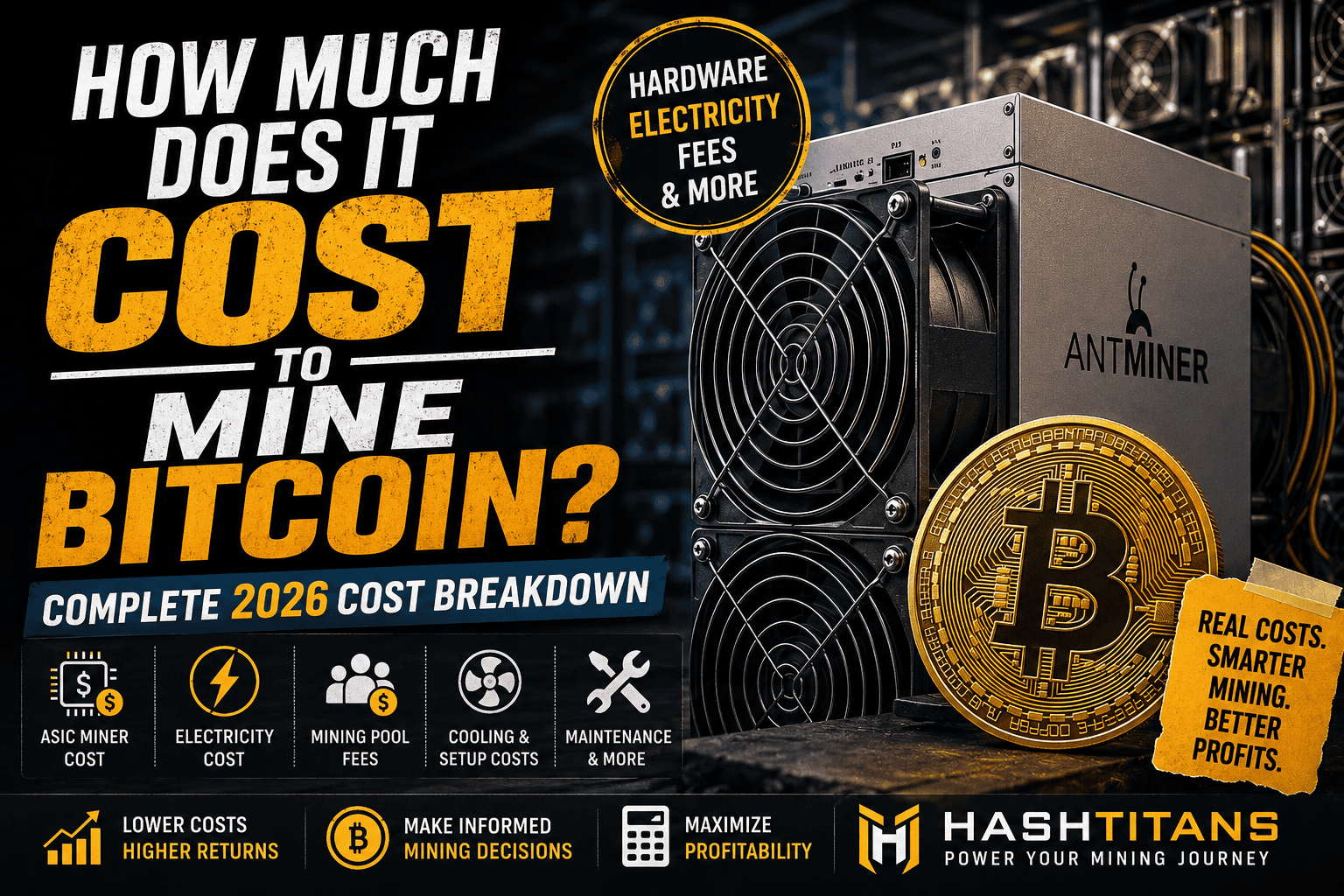

How Much Does It Cost to Mine Bitcoin?
Bitcoin mining has evolved from a hobby that could be done on a home computer into a highly competitive industry powered by specialized ASIC miners. As Bitcoin continues to attract investors and businesses worldwide, one question remains at the top of every beginner’s mind: How much does it cost to mine Bitcoin?
The answer isn’t as simple as naming a single dollar amount. The total cost of mining Bitcoin depends on several important factors, including the price of your mining hardware, electricity rates, cooling requirements, mining pool fees, maintenance costs, and the ever-changing Bitcoin network difficulty.
For some miners, the largest expense is purchasing high-performance ASIC hardware. For others, electricity becomes the biggest ongoing cost, especially in regions where energy prices are high. Understanding these expenses is essential before investing in a mining operation, whether you’re planning to run a single miner at home or build a commercial mining farm.
In this comprehensive guide, we’ll break down every major expense involved in Bitcoin mining, explain how operating costs affect profitability, and show you how modern ASIC miners can improve efficiency. We’ll also compare home mining with commercial mining and provide practical tips to help reduce your overall mining costs.
If you’re looking for reliable mining equipment, HashTitans offers a wide selection of Bitcoin ASIC miners designed for beginners, experienced miners, and commercial operations.
Table of Contents (How much does it cost to mine bitcoin)
- What Determines the Cost of Mining Bitcoin?
- ASIC Miner Costs
- Electricity Costs
- Mining Pool Fees
- Cooling and Infrastructure Costs
- Maintenance Costs
- How Much Does It Cost to Mine One Bitcoin?
- How to Reduce Mining Costs
- Is Bitcoin Mining Still Profitable?
- Frequently Asked Questions
- Final Thoughts
What Determines the Cost of Mining Bitcoin?
There is no universal cost for mining Bitcoin because every mining operation is different. A home miner running one ASIC machine will have very different expenses compared to a commercial mining farm operating hundreds or even thousands of units.
The total cost of mining Bitcoin is influenced by several key factors:
- ASIC miner purchase price
- Electricity rates
- Mining pool fees
- Cooling systems
- Internet connectivity
- Maintenance and repairs
- Bitcoin network difficulty
- Overall mining efficiency
Understanding each of these expenses allows miners to estimate profitability more accurately and choose hardware that provides the best long-term return on investment.
ASIC Miner Costs
The biggest upfront investment for most miners is purchasing specialized Bitcoin mining hardware. Unlike CPUs or graphics cards, ASIC (Application-Specific Integrated Circuit) miners are designed exclusively to perform SHA-256 calculations used by the Bitcoin network.
Modern ASIC miners deliver significantly higher hash rates while consuming less electricity than older generations, making them the preferred choice for anyone serious about Bitcoin mining.
The purchase price of an ASIC miner varies depending on several factors:
- Hash rate
- Power efficiency
- Manufacturer
- Cooling technology
- Market demand
- Bitcoin price
HashTitans offers a carefully selected range of Bitcoin ASIC miners suitable for home miners, businesses, and professional mining farms.
Popular Bitcoin Miners
- Bitmain Antminer S23e Hydro
- Bitmain Antminer S19 Pro 95TH
- Antminer S19 Hydro 158TH
- NerdOctaxe Gamma
- Gamma Turbo Bitcoin Miner
Choosing the right miner is about more than simply buying the fastest model. Energy efficiency, reliability, warranty, and operating costs all play important roles in determining long-term profitability.
Electricity Costs
Electricity is the largest ongoing expense for most Bitcoin miners. Even the most efficient ASIC hardware consumes a significant amount of power while operating continuously.
Your monthly electricity bill depends on three primary factors:
- Power consumption of your ASIC miner
- Hours of operation
- Your local electricity price per kilowatt-hour (kWh)
For example, an ASIC miner that consumes 3,000 watts and runs 24 hours a day will use substantially more electricity than a low-power hobby miner. Over time, even small differences in electricity rates can have a major impact on mining profitability.
Many successful miners choose locations with lower energy costs or invest in renewable energy sources to improve long-term returns.
Ways to Reduce Electricity Costs
- Choose energy-efficient ASIC miners.
- Optimize airflow and cooling.
- Mine during off-peak electricity hours where available.
- Use renewable energy such as solar power when practical.
- Regularly maintain equipment to ensure efficient operation.
Why Efficiency Matters More Than Raw Hash Rate
Many beginners focus exclusively on hash rate when comparing miners. While a higher hash rate increases mining performance, energy efficiency often has a greater impact on long-term profitability.
A slightly slower ASIC miner that consumes significantly less electricity may produce better financial results over several years than a faster but less efficient model.
For this reason, experienced miners carefully evaluate both performance and power consumption before purchasing new hardware.
Key Takeaways
- The cost of mining Bitcoin varies from one operation to another.
- ASIC hardware is usually the largest upfront investment.
- Electricity is the biggest ongoing operating expense.
- Efficient miners reduce long-term costs.
- Choosing the right hardware is critical for profitability.
In the next section, we’ll examine mining pool fees, cooling systems, maintenance costs, and calculate the real cost of mining one Bitcoin in 2026 using different types of ASIC miners.
Mining Pool Fees
For most Bitcoin miners, joining a mining pool is the most practical way to earn consistent rewards. Instead of competing against the entire Bitcoin network alone, miners combine their computational power and share the rewards based on the amount of work contributed.
Although mining pools increase the likelihood of receiving regular payouts, they usually charge a service fee. These fees are generally small compared to electricity and hardware costs, but they should still be included when calculating the total cost of mining Bitcoin.
Typical Mining Pool Fees
| Pool Type | Typical Fee | Description |
|---|---|---|
| PPS (Pay Per Share) | 1% – 4% | Stable payouts regardless of pool luck. |
| FPPS (Full Pay Per Share) | 2% – 4% | Includes transaction fee rewards. |
| PPLNS (Pay Per Last N Shares) | 0% – 3% | Rewards depend on pool performance. |
Choosing the right mining pool depends on your preferred payout structure, fee tolerance, and mining goals. A pool with slightly higher fees may provide more predictable earnings and better infrastructure.
Cooling and Infrastructure Costs
Bitcoin ASIC miners generate a significant amount of heat during continuous operation. Without proper cooling, mining hardware may overheat, reducing efficiency, shortening component lifespan, and increasing the risk of unexpected downtime.
Whether you’re mining from home or managing a commercial operation, cooling should be considered part of your overall mining budget.
Common Cooling Expenses
- Ventilation systems
- Industrial cooling fans
- Air conditioning units
- Hydro-cooling systems
- Dust filtration equipment
- Noise reduction materials
Modern hydro-cooled ASIC miners, such as the Bitmain Antminer S23e Hydro, are designed to improve cooling efficiency while supporting high-performance mining operations.
Home miners often reduce costs by placing equipment in well-ventilated rooms or dedicated mining spaces with adequate airflow.
Maintenance and Repair Costs
Like any electronic equipment operating 24 hours a day, ASIC miners require regular maintenance to remain efficient and reliable. Preventative maintenance helps extend the lifespan of your equipment while reducing costly downtime.
Typical Maintenance Tasks
- Cleaning dust from cooling fans
- Inspecting power supplies
- Updating firmware
- Replacing worn cooling fans
- Checking network connectivity
- Monitoring operating temperatures
Investing a small amount of time in routine maintenance can significantly improve mining performance and reduce long-term operating costs.
Internet and Network Costs
Bitcoin mining does not consume a large amount of internet bandwidth, but it does require a reliable and stable connection. Frequent disconnections can interrupt communication with mining pools, potentially reducing your earnings.
For most home miners, an existing broadband connection is sufficient. Commercial mining farms often invest in redundant internet connections to minimize downtime.
Recommended Internet Requirements
- Stable broadband connection
- Reliable Wi-Fi or Ethernet
- Low latency
- Minimal network interruptions
- Backup internet connection for larger operations
How Much Does It Cost to Mine One Bitcoin?
The total cost of mining one Bitcoin varies widely depending on your equipment, electricity rates, mining pool fees, and network difficulty. There is no universal cost because every mining operation is unique.
Rather than focusing on the cost of producing an entire Bitcoin, many miners calculate their operating expenses on a daily or monthly basis. This provides a clearer understanding of profitability and allows adjustments as market conditions change.
Example Cost Breakdown
| Expense | Example |
|---|---|
| ASIC Miner | One-time purchase |
| Electricity | Largest monthly expense |
| Mining Pool Fees | Small percentage of rewards |
| Cooling | Depends on climate and setup |
| Maintenance | Periodic replacement parts |
| Internet | Usually minimal |
As Bitcoin mining difficulty changes and electricity prices fluctuate, your cost to mine one Bitcoin will also change. Efficient hardware and low operating expenses are essential for maintaining profitability.
Home Mining vs Commercial Mining Costs
| Category | Home Mining | Commercial Mining |
|---|---|---|
| Initial Investment | Lower | Higher |
| Electricity Cost | Residential rates | Often lower bulk rates |
| Cooling | Basic ventilation | Industrial cooling systems |
| Maintenance | Self-managed | Dedicated technicians |
| Scalability | Limited | High |
| Noise | Can be significant | Dedicated facilities |
Why Choosing the Right ASIC Miner Saves Money
Many first-time miners focus only on the purchase price of an ASIC miner. In reality, long-term operating costs often have a much greater impact on profitability.
Energy-efficient miners reduce electricity consumption while maintaining competitive hash rates. Over several years of continuous operation, these savings can be substantial.
HashTitans offers efficient mining solutions, including the Antminer S19 Pro 95TH, Antminer S19 Hydro 158TH, Antminer S23e Hydro, NerdOctaxe Gamma, and Gamma Turbo Bitcoin Miner, allowing miners to choose hardware that matches their budget and performance requirements.
Key Takeaways
- Electricity is typically the largest ongoing mining expense.
- Mining pool fees should be included when calculating profitability.
- Proper cooling protects hardware and improves efficiency.
- Routine maintenance reduces downtime and repair costs.
- Energy-efficient ASIC miners help lower long-term operating expenses.
- Planning your mining setup carefully can significantly improve your return on investment.
In the next section, we’ll explore practical strategies for reducing Bitcoin mining costs, analyze whether mining is still profitable in 2026, and answer the most frequently asked questions from new and experienced miners.
Final Thoughts
Understanding how much it costs to mine Bitcoin is essential before investing in mining hardware. While the initial purchase of an ASIC miner is a significant expense, long-term profitability is influenced by several ongoing costs, including electricity, mining pool fees, cooling, maintenance, and network difficulty.
There is no fixed price for mining one Bitcoin because every mining operation is unique. A miner with access to affordable electricity and energy-efficient hardware will generally have much lower operating costs than someone using older equipment in a high-cost energy region. That’s why choosing the right ASIC miner and optimizing your setup are among the most important decisions you’ll make.
If you’re planning to start mining Bitcoin or upgrade your current operation, investing in modern, efficient hardware can significantly improve your chances of long-term success. At HashTitans, we offer a carefully selected range of professional Bitcoin mining equipment designed for hobbyists, home miners, and commercial mining farms.
Explore our collection of Bitcoin ASIC Miners to compare the latest mining hardware, including the Bitmain Antminer S23e Hydro, Antminer S19 Pro 95TH, Antminer S19 Hydro 158TH, NerdOctaxe Gamma, and Gamma Turbo.
To continue learning about Bitcoin mining, don’t miss these related HashTitans guides:
- How Much Time Does It Really Take to Mine One Bitcoin in 2026?
- Top NerdMiner Solo Miners
- Top Bitcoin Miners Under $500 for Beginners
- Antminer S21 XP vs S23: Specs & Efficiency Comparison
Frequently Asked Questions
How much does it cost to mine one Bitcoin?
The total cost depends on several factors, including your ASIC miner, electricity rates, mining pool fees, cooling expenses, maintenance, and Bitcoin network difficulty. Since these variables change over time, there is no universal cost to mine one Bitcoin.
What is the biggest expense when mining Bitcoin?
For most miners, electricity is the largest ongoing operating expense. Purchasing an ASIC miner is usually the largest upfront investment, but energy costs often have the greatest impact on long-term profitability.
Can I mine Bitcoin at home?
Yes. Many individuals successfully mine Bitcoin from home using ASIC miners. However, you should consider electricity costs, ventilation, noise levels, available space, and local regulations before setting up your mining operation.
Are newer ASIC miners worth the investment?
Modern ASIC miners generally provide higher hash rates and better energy efficiency than older models. Although they often cost more initially, improved efficiency can lower electricity costs and increase long-term profitability.
Is Bitcoin mining still profitable in 2026?
Bitcoin mining can still be profitable when miners use efficient hardware, manage electricity costs, and adapt to changes in mining difficulty and Bitcoin’s market price. Profitability varies depending on each miner’s operating conditions.
How can I reduce the cost of mining Bitcoin?
You can reduce mining costs by choosing energy-efficient ASIC miners, improving cooling and airflow, performing regular maintenance, joining a reputable mining pool, and operating in areas with lower electricity rates whenever possible.
Helpful External Resources
To learn more about Bitcoin mining, blockchain technology, and mining profitability, these trusted resources are worth exploring:
- Bitcoin.org – How Bitcoin Works
- Mempool.space – Live Bitcoin Mempool & Fee Explorer
- Blockchain.com Explorer – Track Bitcoin Blocks and Transactions
- Braiins Academy – Bitcoin Mining Guides and Tutorials
- ASIC Miner Value – Compare ASIC Miner Profitability
- Cambridge Bitcoin Electricity Consumption Index (CBECI)
Ready to start mining? Browse the latest Bitcoin ASIC miners at HashTitans and find reliable, high-performance mining hardware to help you build a more efficient and profitable Bitcoin mining operation.
0 Comments