
Description
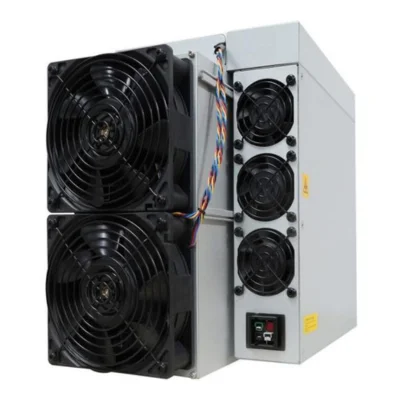
Antminer KS5 20Th/s KHeavyHash Kaspa ASIC Miner
The Antminer KS5 is a powerful Bitmain KHeavyHash ASIC miner designed for Kaspa mining. With a maximum hashrate of 20Th/s and approximately 3000W power consumption, this miner is built for mining farms, hosted mining setups, warehouses, garages and dedicated mining rooms that need reliable Kaspa mining performance.
The Antminer KS5 combines strong KHeavyHash mining output, RJ45 Ethernet connectivity, four-fan cooling and professional Bitmain ASIC engineering. It is designed for serious crypto mining operators who want dedicated Kaspa mining hardware rather than general-purpose GPU mining equipment.
Before purchasing the Antminer KS5, miners should compare hardware price, electricity rate, Kaspa market value, KHeavyHash network difficulty, mining-pool fees, cooling cost, shipping charges, warranty terms and machine condition. Cryptocurrency mining revenue changes regularly, so profitability should always be treated as an estimate, not a guarantee.
Browse more ASIC miners for sale, compare high-performance mining hardware in our best crypto miners guide, or review the upgraded Antminer KS5 Pro.
Antminer KS5 Overview
The Antminer KS5 is a Bitmain Kaspa ASIC miner released in March 2024. It is built for the KHeavyHash algorithm and delivers a maximum hashrate of 20Th/s with approximately 3000W power consumption.
The Antminer KS5 is designed for miners who want strong Kaspa mining performance in a professional ASIC format. Its hashrate, Ethernet networking and four-fan cooling system make it suitable for serious mining environments where stable power, ventilation and uptime are important.
Because the Antminer KS5 uses KHeavyHash, it is different from SHA-256 Bitcoin miners and Scrypt miners used for Litecoin or Dogecoin. It is purpose-built for Kaspa mining and should be evaluated based on KAS price, network difficulty and KHeavyHash pool availability.
With a listed noise level of 76dB, the Antminer KS5 is not a quiet desktop miner. It is better suited for dedicated mining rooms, warehouses, hosting centers, garages or mining farms with proper airflow and sound management.
Antminer KS5 Specifications
| Manufacturer | Bitmain |
|---|---|
| Model | Antminer KS5 20Th |
| Release | March 2024 |
| Mining Algorithm | KHeavyHash |
| Primary Mineable Coin | Kaspa (KAS) |
| Maximum Hashrate | 20Th/s |
| Power Consumption | Approximately 3000W |
| Estimated Efficiency | Approximately 150 W/Th |
| Size Without Packaging | 430 × 195 × 290mm |
| Size With Packaging | 570 × 316 × 430mm |
| Net Weight | 15.8kg |
| Gross Weight | 17.7kg |
| Noise Level | 76dB |
| Cooling System | Air cooling |
| Cooling Fans | 4 |
| Storage Temperature | -20°C to 70°C |
| Networking Connection Mode | RJ45 Ethernet 10/100M |
| Voltage | 220–277V |
| Interface | Ethernet |
| Operating Temperature | 0°C to 40°C |
| Operating Humidity | 10% to 90% |
| Warranty | 180 days |
Actual hashrate, wall power, operating temperature and noise may vary according to firmware, power quality, airflow, ambient conditions, miner condition and operating configuration.
Antminer KS5 KHeavyHash Mining Performance
The Antminer KS5 delivers a maximum hashrate of 20Th/s on the KHeavyHash algorithm. This makes it a high-performance Kaspa ASIC miner for users who need stronger output than smaller home-oriented Kaspa mining machines.
Hashrate measures the amount of mining work the machine can perform. A higher hashrate can improve the miner’s proportional contribution inside a pool, but hashrate alone does not guarantee profit.
Actual pool-side performance may vary because of firmware, operating temperature, power quality, mining-pool latency, rejected shares and miner condition. Operators should monitor accepted shares, rejected shares, average hashrate, fan speed and temperature during operation.
The Antminer KS5 is purpose-built for KHeavyHash. It is not a Bitcoin miner because Bitcoin uses SHA-256, and it is not a Litecoin or Dogecoin miner because those coins use Scrypt.
Power Consumption and Energy Efficiency
The Antminer KS5 consumes approximately 3000W during operation. This equals 3.0 kilowatts of continuous electrical demand.
When operating continuously for 24 hours:
3.0kW × 24 hours = 72kWh per day
At an electricity rate of $0.10 per kWh:
72kWh × $0.10 = approximately $7.20 per day
| Electricity Rate | Estimated Daily Cost | Estimated 30-Day Cost |
|---|---|---|
| $0.05 per kWh | $3.60 | $108.00 |
| $0.08 per kWh | $5.76 | $172.80 |
| $0.10 per kWh | $7.20 | $216.00 |
| $0.12 per kWh | $8.64 | $259.20 |
| $0.15 per kWh | $10.80 | $324.00 |
These estimates cover only the listed miner power draw. They do not include external ventilation, air conditioning, networking equipment, power-distribution losses, mining-pool fees, hosting charges, shipping costs or repair expenses.
Based on 3000W and 20Th/s, the estimated efficiency of the Antminer KS5 is approximately 150 W/Th. Buyers should still calculate full facility-level operating cost because cooling and electrical infrastructure can increase the real cost of mining.
Antminer KS5 Profitability
Antminer KS5 profitability depends on Kaspa mining revenue minus electricity, pool fees, cooling, hosting, maintenance and hardware costs. The miner does not produce fixed income because KAS price, KHeavyHash difficulty and total network hashrate change regularly.
Important profitability factors include:
- Kaspa market value: The value of KAS affects the fiat value of mined rewards.
- KHeavyHash network difficulty: Higher difficulty may reduce the amount earned by the same 20Th/s hashrate.
- Electricity cost: Power is normally the largest recurring mining expense.
- Mining-pool fees: Pool fees reduce gross mining income.
- Pool payout method: Payout structure can affect reward consistency.
- Cooling cost: Ventilation and heat management may add extra electricity use.
- Hardware price: Purchase cost affects the estimated payback period.
- Miner uptime: Downtime reduces valid work submitted to the pool.
- Maintenance cost: Fans, power supplies and hashboards may require service.
- Shipping and duties: Import charges can increase the delivered cost.
To estimate net income, subtract electricity, pool, cooling, hosting and maintenance costs from projected mining revenue. Then compare the net daily result with the hardware purchase price to estimate a simple payback period.
Any ROI estimate for the Antminer KS5 should be updated regularly and treated as a projection rather than guaranteed profit.
Learn more about Kaspa through the official Kaspa website, review Bitmain information through the Bitmain official website, and compare market data through CoinMarketCap Kaspa.
What Coins Can the Antminer KS5 Mine?
The Antminer KS5 uses the KHeavyHash mining algorithm. It is primarily designed for Kaspa mining.
- Kaspa (KAS)
- Other compatible KHeavyHash cryptocurrencies, if supported by active mining pools
Algorithm compatibility does not guarantee that every coin will be profitable or widely supported. Miners should compare network difficulty, market liquidity, mining-pool availability, withdrawal rules, exchange access and expected rewards before selecting a coin.
The Antminer KS5 should not be used as a Bitcoin miner because Bitcoin uses SHA-256. For Bitcoin equipment, browse Bitcoin miners. For broader mining equipment, explore ASIC miners.
Antminer KS5 Price and Buying Factors
The price of the Antminer KS5 can vary depending on machine condition, seller reputation, stock availability, shipping destination, warranty terms and current demand for KHeavyHash mining hardware.
Before accepting a purchase offer, confirm:
- Whether the miner is new, used or refurbished
- The exact 20Th/s configuration
- Whether a compatible power supply is included
- Whether AC power cords are included or sold separately
- Testing documentation and live hashrate proof
- Power-draw readings
- Fan and control-board condition
- Hashboard condition
- Warranty coverage
- Previous repair history
- Shipping, insurance, duties and local taxes
- Return and replacement policy
A low advertised price may look attractive, but a tested Antminer KS5 from a reliable supplier can provide better long-term value than an unverified unit with unknown condition.
You can request Antminer KS5 pricing from HashTitans and compare mining equipment options through ASIC Miner Value.
Antminer KS5 Setup and Installation
The Antminer KS5 requires proper electrical infrastructure, strong ventilation and reliable Ethernet connectivity. It should be installed only where the power system can safely support continuous 3000W operation.
- Inspect the miner: Check the casing, fans, cables, power connectors and Ethernet port for visible damage.
- Confirm electrical capacity: Make sure the circuit supports 220–277V and continuous miner load.
- Use compatible power equipment: Confirm cables, connectors and power distribution equipment are properly rated.
- Connect Ethernet: Attach the miner to a stable wired network.
- Position the miner: Keep air intake and exhaust clear of walls, boxes and loose cables.
- Locate the IP address: Use a network scanner or the manufacturer’s recommended method.
- Open the miner dashboard: Enter the miner’s local IP address in a browser.
- Add pool information: Enter the KHeavyHash mining pool URL, worker name and password.
- Save settings: Allow the miner to connect and begin hashing.
- Monitor startup: Check hashrate, accepted shares, rejected shares, fan speed and temperature.
Electrical work should be completed or inspected by a qualified technician where required. For setup and troubleshooting information, visit the Bitmain Support Center.
Cooling, Heat and Noise Management
The Antminer KS5 uses four cooling fans to move air through the miner and remove heat from the hashboards. Proper airflow is essential because most of the miner’s electrical consumption becomes heat during operation.
With a listed noise level of approximately 76dB, the miner produces industrial-level sound. It is usually better suited for mining rooms, warehouses, garages, hosting centers and ventilated enclosures than bedrooms or shared offices.
Recommended cooling practices include:
- Provide unrestricted cool-air intake
- Direct hot exhaust away from the miner
- Prevent exhaust air from returning to the intake
- Operate within the recommended 0°C to 40°C range
- Keep humidity within the recommended 10% to 90% range
- Keep ventilation paths free from dust
- Inspect all four fans regularly
- Use alerts for overheating and hashrate loss
- Maintain stable electrical power
Do not place the miner inside a sealed soundproof enclosure without professionally engineered airflow. Restricted ventilation can cause overheating, unstable hashrate and premature hardware failure.
Antminer KS5 Maintenance
Routine maintenance helps the Antminer KS5 maintain stable hashrate, reduce rejected shares and extend hardware lifespan.
- Monitor daily hashrate and accepted shares
- Check rejected-share percentage
- Review board and chip temperatures
- Inspect fan speeds and unusual vibration
- Keep intake and exhaust pathways clean
- Remove dust using safe, approved methods
- Inspect Ethernet and power connections
- Install compatible firmware only
- Review logs for recurring errors
- Investigate reduced hashrate quickly
- Keep the mining environment clean and dry
Shut down the miner safely before physical cleaning or inspection. Repairs involving the power supply, controller or hashboards should be completed by qualified technicians.
Antminer KS5 Mining Pool Compatibility
The Antminer KS5 connects to compatible KHeavyHash mining pools through RJ45 Ethernet 10/100M. Pool mining generally provides more consistent payouts than solo mining by combining hashrate from many miners.
Popular mining pool resources include:
Before selecting a mining pool, compare KHeavyHash support, pool fees, payout method, minimum withdrawal limits, server location, latency, pool reliability and rejected-share performance.
Antminer KS5 vs Other ASIC Miners
The Antminer KS5 is different from Bitcoin-focused Antminers because it uses the KHeavyHash algorithm instead of SHA-256. It is mainly used for Kaspa mining, while SHA-256 miners are used for Bitcoin and Bitcoin Cash mining.
Compare related mining hardware and categories:
The best mining machine depends on the target algorithm, coin, electricity cost, hardware price, cooling capacity, hosting restrictions and expected operating life.
Who Should Consider the Antminer KS5?
The Antminer KS5 is best suited for operators who understand ASIC mining requirements and have access to stable electricity, effective ventilation, compatible KHeavyHash pools and reliable wired internet.
- Kaspa miners
- KHeavyHash mining operators
- Professional mining farms
- Hosting customers seeking Kaspa hardware
- Operators with affordable electricity
- Facilities with adequate electrical and cooling capacity
- Resellers sourcing Kaspa ASIC miners
- Miners who can manage industrial heat and noise
The miner may not be suitable for casual home users who need quiet equipment, low power consumption or simple plug-and-play profitability.
Frequently Asked Questions
What is the hashrate of the Antminer KS5?
The Antminer KS5 delivers a maximum hashrate of 20Th/s on the KHeavyHash algorithm.
How much power does the Antminer KS5 consume?
The miner consumes approximately 3000W. At the rated level, continuous operation uses about 72kWh per day.
Which cryptocurrency can the Antminer KS5 mine?
The Antminer KS5 is primarily designed to mine Kaspa using the KHeavyHash algorithm.
Is the Antminer KS5 suitable for home mining?
It can technically operate in a prepared garage or dedicated mining room, but its 3000W power demand, heat output and 76dB noise level make it unsuitable for quiet indoor spaces.
Does the Antminer KS5 use Wi-Fi?
No. The Antminer KS5 normally connects through RJ45 Ethernet 10/100M.
Can the Antminer KS5 mine Bitcoin?
No. The Antminer KS5 uses KHeavyHash. Bitcoin uses SHA-256 and requires SHA-256 ASIC hardware.
Is Antminer KS5 mining income guaranteed?
No. Mining income varies with Kaspa price, network difficulty, pool performance, electricity cost, miner uptime and other operating expenses.
What is the warranty on the Antminer KS5?
The supplied product specifications list a 180-day warranty. Buyers should confirm warranty terms before ordering.
Where can I request Antminer KS5 pricing?
You can contact HashTitans to request current Antminer KS5 stock, pricing, shipping information and warranty terms.
Request Antminer KS5 Price and Availability
Before ordering, confirm the exact 20Th/s configuration, stated power consumption, included PSU, AC cable requirements, machine condition, warranty coverage, shipping charges and expected delivery schedule.
Antminer KS5 20Th/s KHeavyHash Kaspa Miner
Antminer KS5 Product Summary
The Antminer KS5 is a KHeavyHash ASIC miner with 20Th/s hashrate, approximately 3000W power consumption, RJ45 Ethernet 10/100M connectivity, four-fan cooling and 220–277V input support. It is designed for Kaspa mining and professional mining environments that can manage heat, noise and continuous power demand.
Before purchasing this miner, compare projected Kaspa mining revenue against electricity, pool, cooling, hosting, maintenance, shipping and hardware expenses. Cryptocurrency mining returns are variable and should not be treated as guaranteed income.
Contact HashTitans for the current Antminer KS5 price and availability.
Reviews
There are no reviews yet.